
_1787677131135.png?w=280&format=webp)
DESIGN & TECHNOLOGY
The Ultimate Guide to Properly Handling Freshly Caught Fish for Top Table Quality
Posted:05/19/2026 11:25AM
How to Keep Your Catch in Top Shape for the Table
Keeping your catch fresh starts the moment the fish hits the deck. As soon as you land it, dispatch the fish quickly with a firm strike to the head. This minimizes stress, which can negatively affect texture and flavor.
To Bleed or Not to Bleed
Not every fish needs to be bled, but for many species, it makes a noticeable difference.
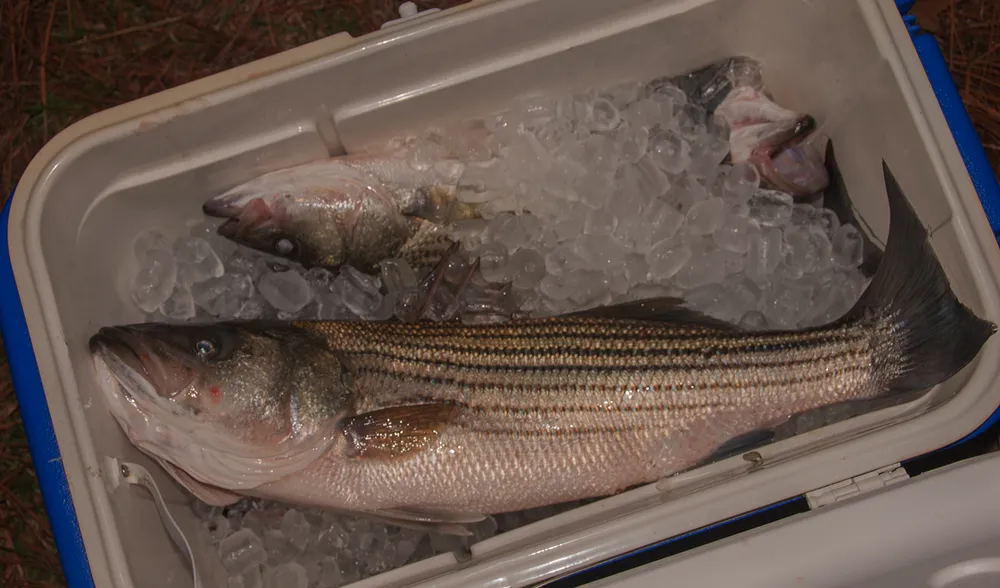
- Best candidates for bleeding: oily, strong-flavored, or larger fish like tuna, kingfish (king mackerel), Spanish mackerel, bluefish, striped bass, cobia, and amberjack.
- Less critical for: smaller or mild white fish like flounder, snapper, black sea bass, porgies, trout, and sheepshead
If you choose to bleed the fish, cut the gills or make a small incision at the base of the throat and let it drain head-down in the water or a bucket for a few minutes. This improves flavor, appearance, and shelf life by removing blood that can spoil quickly and helps bring the temperature of the fish down.
Chill It Down Immediately
Get the fish cold as fast as possible. Place it in a cooler with a saltwater ice slurry (ice + seawater or lightly salted freshwater)
- Make sure the fish is fully surrounded by ice, including inside the body cavity for larger fish
- Keep the cooler drain slightly open so meltwater escapes. This keeps the ice cleaner and colder
- Rapid chilling is one of the most important steps in preserving quality.
Whole Fish vs. Fillets: Handling Differences
Smaller Fish Are Best Kept Whole. Fish like flounder, snapper, porgies, trout, black sea bass, sheepshead, and smaller striped bass are often best handled whole, especially if you plan to cook them within a day or two.
- Gut them as soon as practical
- Remove gills if possible (they harbor bacteria)
- Rinse lightly and dry thoroughly
- Store whole on ice or in the fridge
Keeping smaller fish whole helps retain moisture and flavor, especially for grilling, roasting, or frying.
Larger Fish
Larger fish like tuna, mahi-mahi, wahoo, cobia, kingfish, amberjack, and larger striped bass—should be cut into fillets or loins sooner rather than later. If your fishing regulations allow it sometimes filleting fish while the bite is slow and storing in zip lock bags in the cooler can be a great way to get your fillets on ice as soon as possible
- Gut and clean as soon as possible
- For very large fish, consider quartering or loining at sea to help them cool faster
- Remove the bloodline along the backbone when filleting for better taste
- Keep portions clean, dry, and cold
Breaking down larger fish allows for more efficient chilling and more precise storage, which is critical for maintaining quality.
Storage Guidelines
- Short-Term (24–48 Hours)
- Store fish on a tray or rack in the refrigerator (not sitting in water)
- Cover loosely with plastic wrap or parchment
- Keep temperature as close to 32°F as possible without freezing
Long-Term (Freezing)
- Cut into fillets or portions
- Rinse and dry thoroughly
- Wrap tightly in plastic wrap (remove all air)
- Add a second layer (foil or freezer bag) or vacuum seal
- Label with species and date
Storage life:
Refrigerated: 1–2 days at peak quality
Frozen: 2–6 months (lean fish last longer than fatty fish)
Cooking Your Catch
When it’s time to cook, simplicity is key.
- Let fish sit at room temperature for 15–20 minutes before cooking
- Lightly oil and season (salt, pepper, citrus, herbs)
- Cook gently—grill, bake, poach, or pan-sear
Look for:
- Opaque flesh
- Easy flaking
- Internal temp around 125–135°F for most species
Avoid overcooking, it quickly dries out even the freshest fish.
By following a few fundamental rules you will dramatically improve the quality of your catch and you’ll get the best from your time on the water every time it hits the plate.
Search
Subscribe to The Catch
Latest Post

DESIGN & TECHNOLOGY
Sailfish Care Advice from Professional Detailers
DESIGN & TECHNOLOGY
Center Console: The All-Purpose Boat

Search
Subscribe to The Catch